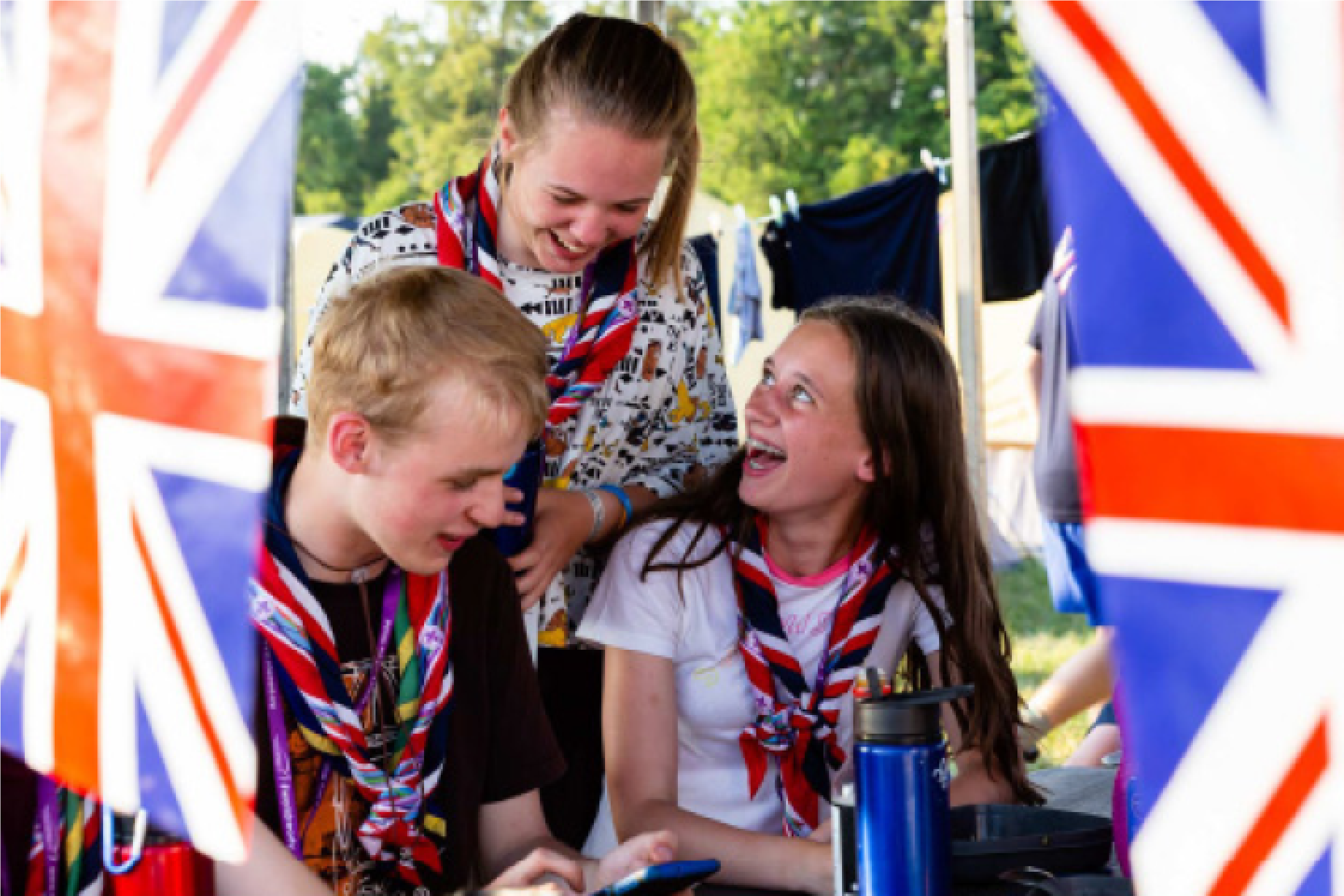
Cambridgeshire is the heart of East Anglia!
There are over 7,000 members of the Scout Association in Cambridgeshire, including 1,400 Beaver Scouts, 1,800 Cub Scouts, 1,400 Scouts and 300 Explorer Scouts and members of the Scout Network.
There are 1,300 adult volunteers making this happen working directly to deliver the youth programme and to provide management and administrative support.
This makes Cambridgeshire Scouting one of the largest co-educational youth movements in the County. HQ Membership Services & Programmes On-lineThe County Team is looking at ways it can support more of our adult volunteers to access the support and resources on www.scout.org.uk
|
|||||||
County Executive Elections
Advice on AGM proceduresAt the recent Executive Support day some points were raised regarding AGM Procedures. Advice from POR and other sources of good practice is set out below. Minutes The Minutes of an AGM can only be approved at the following AGM. Minutes of the previous Annual General Meeting, (typed and circulated; these do not need proposing, the Chairman will ask the meeting for 'approval to sign'. The minutes can not be formally approved at any other committee meeting as it is the AGM and the membership will be different. Accounts The AGM is “to receive and consider the annual report of the Group/District/County Executive committee including the annual statement of accounts” The Executive committee must scrutinise the accounts and approve them at a meeting prior to the AGM, the accounts will then form part of the executive committee’s report to the AGM. The Chairman gives the Executive Report and the Treasurer the Accounts. (These are not proposed and seconded the AGM is simply asked to approve them usually by a show of hands). Two further points regarding AGMs. 1. There should be no matters arising at AGMs as anything brought up at a meeting should be dealt with by the Executive committee at its subsequent meetings. 2. There should not be Any Other Business as the AGM is a formal reporting and appointment meeting, not a general committee meeting. If a committee feels there should be the opportunity for members to raise issues even though strictly speaking an AGM is not the forum, then in the notice calling the meeting it should be stated that if anybody wishes to raise an item of AOB the secretary should be informed in advance and the time clearly stated usually 24 hours minimum. |
|||||||
The Theme for 2009 "standards"Scouting is different from other youth organisations and this is due to things such as our law and promise, the fact we have a uniform and a badge work system as well as being part of a well established worldwide movement. These are the elements that have made Scouting stand out and appeal to young and old alike, whilst there have been changes to keep us relevant to today’s youth these standards and underlying ethos of the movement have remained the same. Remember and live by our law and promise, there are many ways to wear the uniform but if you are investing new members or on parade we should all make that bit of extra effort to make sure we look smart and treat the members and uniform with respect. If we are organising a camp or pitching a tent, planning a terms meetings or a handiwork session attention to detail can make all the difference. Members join us for camping, challenges, new experiences, activities, comradeship and adventure in a disciplined structured organisation, we provide all this and much more in a safe friendly environment and the County is there (amongst other things) to supplement the work of Districts and Groups we must keep this in mind and maintain the quality of our work. Maintaining our standards in all areas from training to how we look after our headquarters is fundamental to the ethos of Scouting. Whilst we all like to see our numbers growing, we must not sacrifice quality so it is important that we work within our means or seek support. If you are not sure please ask as there is a wealth of experience at Group, District and County level particularly amongst our older and senior members that they are only to willing to provide, just ask. If you are not sure who to ask perhaps a question sent to the editor of Noticeboard could generate an answer and we could also print it in a future edition to help others. |
County County Commissioner is elected to Committee of the Council for the Scout Association
During this years Scout Association Annual General Meeting in London our County Commissioner Richard Hames was elected to the Committee of the Council, the “Board” of The Scout Association.
Richard sits on the Board with the Chief Scout and his Deputy, the Chief Executive of the Association, the Association Treasurer, the two National Commissioners, the Commissioners for Scotland, Northern Ireland and Wales, eight other elected members plus three youth representatives.
The Committee of the Council manages the business of The Scout Association in accordance with the Bye Laws of the Association. It is the Association's national decision-making body. Its members are the Trustees of the Association. The Committee decides the policy and rules of the Association.
The Committee delegates certain powers to four sub-Committees where the main work is done, Richard is a member of the Finance sub committee where all things financial to do with headquarters are decided, from the amount to spend on a new program development, approving 2007 costs and of course the annual membership fee.
Other sub committees are:
- General Purposes Sub-Committee
- Headquarters Appointments Sub-Committee
- Operations Sub-Committee
Richard said “I was motivated to get involved with the committee’s work for two main reasons, first, Cambridgeshire members attending at national events said they could be improved and second, to learn in more depth the areas that will benefit Cambridgeshire Scouting.
The Committee meets four times a year (plus the AGM) and meetings are held over weekends. Sub committees also tend to meet quarterly or more often when working on a specific issue.
The County Commissioner
Richard Hames is County Commissioner for Cambridgeshire and has responsibility for some 1,000 adult volunteers delivering Scouting to 5,000 plus young people across the county every week.
Richard is excited about the opportunities that Scouting provides for the development of young people in Cambridgeshire
“I am convinced that Scouting activities have a real appeal to boys and girls across the age range from Beavers (for 6 to 8 year olds) through to the Scout Network ( for 18 plus). I see the role of my team is to develop these opportunities and allow more young people to join in the adventure!”
“With the right level of adult support and an exciting outdoor programme that is attractive to young people, Scouting is well positioned to grow and in Cambridgeshire, we are really looking forward to the challenge”.
So who is Richard Hames?
Richard has been a member of the Scout movement for 40 years and in that time has worked as an adult volunteer in Fulbourn, Burwell and Newmarket. More recently he was District Commissioner for Newmarket where he worked hard with an enthusiastic team to develop Scouting in the town and surrounding villages.
He was introduced to the movement by his father, a Kings Scout, and joined the Wolf Cubs in Fulbourn in 1966. In Cubs he was a Sixer and Scouts, PL of the Eagles complete with stave. In Venture Scouts, Richard took part in many adventurous activities, regularly helping at the Devizes to Westminster canoe race and expeditions in the Lake District, Dartmoor, Scotland, Wales and the Peak District. He experienced International Scouting at Jamborees in Austria and Germany.
Outside of Scouting, Richard is Sales Manager for a Cambridge high tech company and lives in Great Wilbraham with his family.
The County Team
At the heart of the structure are the District Commissioners, the key managers of Scouting in the County. The DCs are supported by the County Commissioner and the County Team. The DCs are currently as follows:
- Cambridge - Pam Butler
- Crafts Hill - John Lamoon
- Cromwell - Tony Best
- Ely - David Briston
- Fenland - Judith Halliday
- Granta - Will Bull
- Hinchingbrooke - Paul Robbins
- Medehamstede - Chris Pallister
- Nene - Trevor Watson
- Newmarket - Steve Taylor
This team is supported by five Deputy County Commissioners who report to Richard in the respective areas of Adult Support, the Youth programme, Adult Training, Communications and Non section Activities. The five Deputy County Commissioners are as follows:
- Adult Support - Di Wisbey
- Youth Programme - Phil Garrett
- Adult Training - Chris Halliday
- Communications - Chris Ward
- Development - Jackie Daniels
The County Commissioner's strategy
A new dawn for Cambridgeshire Scouting
Richard is very enthusiastic about the future of Scouting in Cambridgeshire and in particular wants to see the movement:
- Active
- Growing significantly year on year
- Highly visible throughout the whole community
- Well supported by adult volunteers
- Well funded.
Richard has identified a number of themes which are set out below:
Theme 1: Continuous Recruitment
“We have all seen problems when a long standing leader stands down and there is a flap about who could possibly take over. I want to encourage continuous development of adults in Scouting.
From encouraging parents to become involved in the Colony, Pack or Troop or Group events, to recruiting them as leaders or Group supporters.
This gives the more experienced leaders confidence to become more involved in District and County events, which in turn helps with identification and development of those leaders as potential District team members.
If this is done well and regularly you will not have the problems when looking for new leaders. There are Groups and Districts in this County where this happens and they are well supported, well funded, have full leadership teams and are confident, active and dynamic in what they do.
This is not dependent on the social mix of the Group but more about how it is run, so I will be working with DCs to encourage this approach throughout the County.
This is not pie in the sky, it requires work but pays back dividends time after time probably because it changes the ethos of the Group to be much more open.
Scouting is also much more flexible than many people perceive, just because a given person such as a DC did a job in one way does not mean that it always has to be done that way.”
“It is the responsibility of everybody in this room as more experienced members of the Association in Cambridgeshire to identify people for development.
I challenge everybody in this room to think of just one person to either take on a new role or even better introduce a new member to the movement.”
Theme 2: Communications
“The newsletter will be colour printed and posted to every leader, Group and District Officer. In addition all Councillors (Parish, District and County) will receive a copy and it will also be distributed to schools, libraries and supporters.
The newsletter will also be sent to leaders or administrators who have left so we stay in contact and perhaps encourage them back in a different or less demanding role.”
Theme 3: Visibility of the County Team
“The County will be more visible within the Districts. I am therefore asking that each of the sectional ACCs visit each District at least once per year.
For the Scout section in particular Richard said there would be a County Camping Competition with the prize of a tent sponsored by Simpers Ropeworks from Cambridge. This was a firm commitment and a clear example as to how local business is only too pleased to be supporting Scouting.”
Theme 4: Vice Presidents Club
This is a brilliant idea and it is already a reality. Lord Lieutenant Hugh Duberly has agreed to head it up as the County President and Alex Alexander is the Chairman.
The club will include amongst its members former County Commissioners, County Chairpersons and other senior members of the County.
Members of local business, the Civil Service and politicians will be invited to join for a membership fee . Richard is confident they will join and support Cambridgeshire Scouting.
Executive Structure in Cambridgeshire
The County Scout Council
Cambridgeshire County Scout Council is the electoral body which supports Scouting in the County. It is the body to which the County Executive Committee is accountable.
Membership of Cambridgeshire County Scout Council is open to:
Ex officio Members
- County President;
- County Vice-Presidents;
- Chief Commissioner;
- County Chairman;
- County Commissioner;
- County Secretary;
- County Treasurer;
- Deputy County Commissioners;
- County Scout Network Commissioner;
- County Training Manager;
- Assistant County Commissioners;
- County Scouters;
- County Skills Instructors;
- County Advisers;
- County Administrators;
- Chairmen, County Scout Fellowship(s);
- Local Training Managers;
- District Commissioners;
- District Chairmen;
- District Secretaries;
- District Treasurers;
- District Scout Fellowship Chairmen;
- Chairmen of each District Troop Leadership Forum;
- Chairmen of each District Explorer Scout Committee;
- Chairman of the Scout Network Committee.
Nominated Members
- the number of persons to be elected annually by the County Scout Council from each of the following categories is decided by the County Scout Council.
- persons recommended by the County Commissioner in consultation with the County Chairman.
- County Scout Network Members nominated by the County Scout Network Conference.
- County Scout Fellowship Members nominated by the County Scout Fellowship(s).
- Scouters nominated by District Scout Councils, in Cambridgeshire each District Scout Council is asked to nominate the following to the County Scout Council.
- One uniformed Scouter
- One non-uniformed representative
- Two members aged between 18 and 25 years.
- Explorer Scout Members nominated by District Explorer Scout Meetings.
Co-opted Members
- the County Scout Council may co-opt members annually. Such co-opted members may include representatives of organisations with whom it is desired to maintain co-operation eg Girlguiding UK, religious bodies, other youth organisations and Local Education Authorities.
- members are nominated by the County Commissioner.
- the number of members co-opted must not exceed the total of Ex officio and Nominated Members.
Invited Member
- the Field Development Manager/Officer.
The County Scout Council must hold an Annual General Meeting within six months of the financial year end to:
- approve the Annual Report of the County Executive Committee, including the annual statement of accounts;
- approve the County Commissioner’s nomination of the County Chairman and nominated members of the County Executive Committee;
- elect a County Secretary unless the County Secretary is employed by the County Executive Committee;
- elect a County Treasurer;
- elect certain members of the County Executive Committee;
- elect a representative(s) of the County Scout Council to serve as Nominated Members of the Council of The Scout Association;
- elect a representative of the County Scout Council to serve as Nominated Youth Member on the Council of The Scout Association;
- appoint an auditor or independent examiner or scrutineer as required.
The County Executive
Cambridgeshire County Executive Committee exists to support the County Commissioner in meeting the responsibilities of the appointment and to provide support for Scout Districts and the Scout Network in the County.
The County Executive Committee is responsible for:
- promoting the development of Scouting in the County;
- arranging for harmonious co-operation between Districts and between units of the Association and with other organisations;
- the raising of funds and the administration of the County’s finance and property, including the Scout Network;
- appointing a County Appointments sub-Committee and a Chairman of such a sub-Committee;
- appointing other sub-Committees and their Chairmen as the Committee may require;
- attending to County administration, particularly:
matters relating to Leader Warrants;
the appointment of Skills Instructors, Administrators and Advisers;
registrations, membership of the Movement;
the presentation of an Annual Report and annual statement of accounts to the Annual General Meeting of the County Scout Council.
Cambridgeshire County Executive Committee consists of:
The County Executive – Ex officio Members
| County Chairman | Lawrence Noble |
| County Treasurer | Jim Gilbert |
| County Secretary | Cindy Abbot |
| County Commissioner | Richard Hames |
| County Network Commissioner | Phil Garrett |
County Executive Members Nominated by the County Commissioner
- persons nominated by the County Commissioner in consultation with the County Chairman,
- the nominations must be approved at the County Annual General Meeting,
- persons nominated need not be members of the County Scout Council and their number must not exceed that of the elected members.
For elected members of the Executive postal elections will held prior to the Annual General Meeting. The elected members will consist of 9 of whom 3 shall be youth members (18/25).
| Di Wisbey | Deputy County Commissioner for Adult Support Di is the official deputy for the County Commissioner when he can not attend, As an ex DC for Crafts Hill she brings a wealth of experience to the committee. |
| Phil Garrett | Phil is the Deputy County Commissioner responsible for youth program development, Phil is active at many levels within the County and is the Chairman of the CamJam committee. |
| Barry Wallman | As ACC Campsites Barry is responsible for the running of the Abington camp site, he advises the committee on issues relating to this site, Barry has held many positions within the movement and was a past DC of Cambridge. |
| TBC | Chairman of the County Scout Network |
Members Elected by the County Scout Council
- members of the County Scout Council elected at the County Annual General Meeting,
- these should normally be four to six in number,
- the actual number must be the subject of a resolution by the County Scout Council. In Cambridgeshire we elect people for a 3 year period followed by one further 3 year period
| Beryl Boyce | Beryl has held many positions in Scouting including ACC Cubs and County Secretary, she is currently the County Appointments Secretary and was elected to the committee in 2005. |
| Reg Cullum | With experience in many positions in the movement Reg is currently Chairman of Granta District. Reg was elected to the committee in 2006. |
| Karen Thorpe | As the youth member Karen contributes greatly to the Committees discussions. She is a member of the Cambridgeshire Scout Network |
| Malcolm Robinson | Malcolm is a member of Medehamstede District Scout Fellowship and is Treasurer for the Peterborough Gang Show. He has many years experience as a Scouter in the Peterborough area |
Co-opted members
- persons co-opted annually by the County Executive Committee,
- the number of co-opted members must not exceed the number of members who may be elected.
| Stella Johnson | A GSL and an active member of Ely District |
Right of Attendance
- the Regional Commissioner, Rob Lyon, has the right of attendance at meetings of the County Executive Committee.
Invited to attend
- the County’s Nominated Member(s) on the Council of The Scout Association*,
- The County’s Nominated Youth Representative on the Council of The Scout Association*,
- Field Development Manager/Officer.
- (if not already a member of the Executive Committee)
The County Executive Committee has established the following Sub-Committees. Sub-Committees are chaired by an Executive member and consist of members nominated by the Committee in Cambridgeshire these are presently.
- County Appointments Advisory Sub Committee
- The Finance Sub Committee
- The Property Sub Committee
- Genral Purposes Sub Committee
The County Commissioner and the County Chairman are ex officio members of any sub-Committee of the County Executive Committee.
Any fund raising committee must include at least two members of the County Executive Committee, in addition to the ex officio members. No County Scouter should serve on such a fund raising sub-Committee.
Gift Aid Scheme
If your Group/Unit doesn't currently make use of the Gift Aid scheme then you are missing out on a source of “easy” (but perfectly legal) funds. Essentially Gift Aid enables you to currently reclaim 28.2p in the £1.00 on such items as Group and Unit Subscriptions. (It certainly beats standing in the rain at a car boot sale or on the door for a jumble sale etc. as a source of cash!)
I am advised that one Cambridge based Group has received over £8k in claims covering a period of 5 years and also of another Peterborough Group that gets approx. £1.2k annually by this means. (This could help meet in part Membership subscription levies or purchase new camping or other equipment for the Group). Further information about the process,including what records need to be kept etc. can be obtained via HMRC's website at www.hmrc.gov.uk/charities or by ringing their Helpline on 08453 02 02 03 , which connects you to an adviser. Alternatively you can call at local tax enquiry centres at Cambridge, Huntingdon or Peterborough.
Information is also available on this topic atwww.scoutbase.org.uk/library and look at Fact Sheet FS190006 “Gift Aid for Membership Subscriptions and Donations”. Or you can ring the information centre on 0845 300 1818 fer a personal response.
The amount of the “rebate” is based on the basic rate of Income Tax. To be able to recoup the money the subscriber/parent/guardian etc. must be a UK taxpayer and have paid at least the amount of tax being recouped in the first place.
There is no need to change your Group or District Year End date to align with HMRC's tax year end date of 5th April. But claims will need to reflect the two dates. (Namely your year end date say 31st December 2008 and 5th April 2009). To make a claim you will need the latest form R68 from HMRC.
VAT concessions
Another issue that could be of benefit concerns VAT. If you pay directly for heating and lighting charges to the likes of E on then it is possible to claim to have VAT charged at 5% as opposed to 17.5%.
There are currently three rates of VAT:
(1) a standard rate of 17.5%, which applies to most goods and services;
(2) a reduced rate of 5%, which applies to some supplies e.g. domestic fuel and power; (including Charity Non business supplies) and
(3) a zero rate, i.e. tax charged at 0%, which applies to some supplies e.g. books, newspapers, basic foodstuffs, children’s clothing and exports.
Further details and information can be found on HMRC website (www.hmrc.gov.uk) in FAQs re VAT etc.
For more information about either topic then please contact Malcolm Robinson on 01733 810708 .